

Cosmetic Acupuncture Information
Cosmetic acupuncture is meant to be a natural skin rejuvenation technique that stimulates the body’s healing energies and increases circulation to reduce wrinkles, fine lines and folds. Acupuncture, a form of Traditional Chinese Medicine (TCM), is designed to free up Chi, or energy. When the needles are applied to the body and face, production of collagen and elastin may be stimulated, and skin is “plumped up.” Acupuncture is an effective anti-aging treatment; so much so it replaces the need for plastic surgery. During cosmetic acupuncture treatments such as the acupuncture facelift, tiny acupuncture needles are inserted in regions of the body to unblock one’s “qi”, or vital energy. An imperceptible electrical current may also be passed among the needles. An herbal moisturizer or essential oil is often incorporated into a treatment. A treatment series entails 30-minute treatments, twice weekly for three weeks.
Cosmetic acupuncture entails no incisions, sutures or acid peels and it will not produce sudden, drastic changes in underlying structures. It took decades of stress, sun damage and exposure to environmental toxins for your skin to reach a state of crisis, and the damage will not be instantly undone. The remedy cosmetic acupuncture may offer is the reduction or erasure of fine lines and the softening of deeper ones. Additionally, patients may experience the firming of jowls and a reduction in the size of under-eye bags. It is not unusual for clients to report enhanced skin tone, increased energy and eyes that sparkle. Cosmetic acupuncture is a good alternative for women who don’t want the side effects associated with a surgical facelift. Working on a 40-year-old face is different from a 60-year-old face, For that reason, starting the treatments when you’re in your 30s, or 40s is ideal.
Facial massage is performed weekly or every other week. Patients are also taught to perform self-massage at home with our proprietary herbal Regenerating Cream and Tonic Oil daily. Exercises, including Chi/energy and cardiovascular types, can contribute to improved blood flow into the face and elsewhere.
Additionally, patients are given herbal supplements, such as our proprietary skin formula that nourishes the skin and promotes healthy body functions within. Patients are counseled on a special beauty-skin diet and nutritional intake designed to detoxify as well as promote structural support.”
Reprinted with permission from the Zionsville Times Sentinel, LIVESMART, WEDNESDAY, FEBRUARY, 7, 2007
Acupuncture, internal medicine, anesthesiology and even surgery were practiced in China, centuries before the rest of the world. As long ago as 2600 B.C. the study of the human body became a sophisticated science. The body parts and systems were identified, as were the herbs that could best nourish each part and each system of the body.
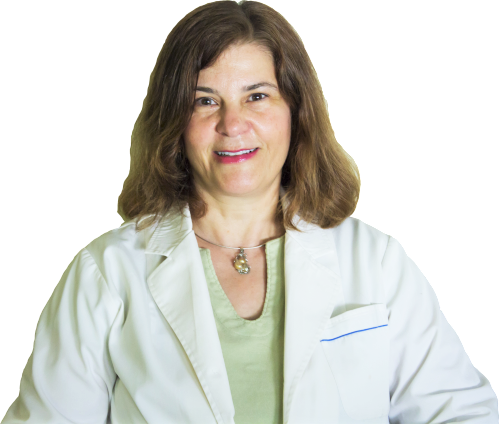
Angelica Kokkalis is a doctor of traditional Chinese medicine.
The Chinese believed in an extensive communication system whereby body parts and systems were interconnected with meridians, through which energy and communication could flow. Fine needles, grouped in specific combinations, were expertly inserted into some of the eight hundred points of the body’s vast energy network. These are connective points along the meridians or channels moving the energy flow, or Qi “Chee,” in the body and its systems. One’s total wellness is physical, mental and spiritual. This approach to health seems mysterious to much of the world, but it’s been proven effective through thousands of years of Chinese experience. Doctors were rewarded for keeping patients healthy.
During China’s first 3,000 years, in a period known as the golden age of China, more than 161,000 pieces of data were recorded. Only 36 of these entries made any reference to disease. Utilizing nature to replenish the body and letting, the body function as it was. designed is appropriately called the philosophy of regeneration — “Life replenishing life.”
A healthy body and a healthy mind brought peace, harmony and productivity. China’s golden years brought forth one of the greatest civilizations to ever populate the globe. A healthy nation of progressive people achieved great heights in agriculture, engineering, industry, education and health. The Chinese made discoveries thousand of years before the western world. Iron was cast in China centuries before others learned the art. Lacquer, paper, porcelain and even matches and the umbrella were discovered centuries before other civilizations. As with many great civilizations health, prosperity and progress seemingly can not last forever. Eventually contingence and greed culminate in distraction.
For China, the peace and harmony of one of the world’s greatest civilizations ended after nearly 3,000 years. What became known as the warring states began 2,200 years ago. The philosophy of regeneration had deteriorated. Treating disease, pestilence and battle wounds became the priority for doctors. Rather than utilizing herbs as foods, they were increasingly used as medicine and poultice. Treatment of symptoms became the predominant approach, something we call the philosophy of substitution.
During the Ming Dynasty, about 700 years ago, substitution utilizing herbs reached the peak of popularity. And then during the Qin Dynasty in 1644, and during the Boxing rebellion in 1912, great distraction swept through the land. Priceless artifacts, ancient documents and a generation of recorded wisdom was plundered and lost. Traditions were destroyed and the golden years of China seemed to be for ever lost.
During the years that followed western medicine and its practices dominated China. Although it appeared that the traditional methods had vanished, they were still quietly practiced, and the ancient wisdom was preserved. The Chinese eventually realized western medicine was not the panacea it was believed to be: Upon this realization came the resurrection of traditional Chinese medicine. Today it is acknowledged worldwide that combining TCM with western medicine makes the holistic approach to optimizing individual health possible. Thus, creating a Ying and Yang for a new era of medicine.
Reprinted with permission from the Zionsville Times Sentinel, AG/ ENVIRONMENT, WEDNESDAY, DECEMBER, 27, 2006
Five-thousand years ago in a tranquil basin of the Yellow River, a civilization was born deep in China. The people and culture that emerged from this region eventually inhabited much of the Asian continent. They had no formal religion, so instead their lives were governed by an abiding respect for nature and a fundamental reverence for the powers of creation. As they observed nature, they built a philosophy and patterned their lives upon the natural laws of the universe. Life, along with its many challenges, is a puzzle. Rather than creating solutions, the early Chinese instead sought answers. They observed and imitated nature, a model already perfectly designed. Their philosophical base was deep and became defined to their generation. The numbers one through five have a symbolic meaning in the Chinese philosophy.
For man and nature there is but one origin, a creator of peace and harmony. The first dimension, heaven, served to remind man of a divine realm beyond the tangible earth, and that all things physical also have a spiritual nature. Two represents balance; the competing and complementary forces of Ymg and Yang, one inward one outward, one positive one negative, but whole when in balance. The number three stands for heaven, earth and man. Human beings exist to live on, and of, the earth. Four illustrates variety and is exhibited by the four seasons of nature. In variety is found differences, changes and the joy of the earth. The number five represents the five elements that comprise all of the universe: fire, earth, metal, water and wood. For harmony to exist, all five elements must be present in man, fish, animals, plants, trees and flowers. In all creations the five elements are found working in constructive tandem in what is called the “cycle of quinary.”
The Chinese have believed for thousands of years that true harmony is achieved only when balance exists. To achieve harmony in their lives, the Chinese sought to master the laws of nature and the laws of universe. Because they had no understanding of an afterlife, the quality of their present life became their primary focus. The ancient Chinese summed their belief with a saying, “to live long and to five well.” Health and longevity were achieved outwardly through exercising and inwardly through proper nutrition and meditation. To the Chinese, health was a product of the foods they ate, the air they breathed, how they exercised their bodies and how they exercised their mind. The quality of their food reflected directly upon the quality of their lives. Food must be natural, fresh and wholesome. It must be in great variety, and always in balance. Herbs and vegetables, the natural gifts from the mother earth, were the foods that the Chinese historically relied upon to promote health. They believed in pure and natural foods which, when eaten in proper quantities and in the right combination, kept the body nourished, balanced and cleansed. With thousands of herbs, there is an incredible variety, and as with all whole foods, herbs maintain the natural synergy and balance so vital to the human body.
A man named Shen Nan experimented with plants and herbs to understand how the body could be nourished. He studied and recorded the effects on his body of eating as many as 70 different herbs each day. Hence, he discovered the herbs as foods. Shen Nan taught his people how to identify, cultivate and utilize herbs beneficial to the body and became known as the God of Herbs. The legacy was continued by Huan Di, the Yellow Emperor. He subsequently assembled the finest doctors to study and document the many benefits of herbs as foods.
Reproduced with permission from the Lafayette Joural and Courier, HEALTH & FITNESS, TUESDAY, MARCH 23, 2004
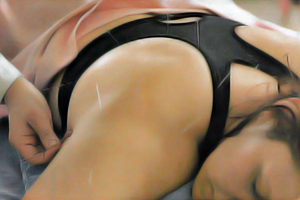
Dr. Angelica Kokkalis inserts acupuncture needles into Serene Ross, a Purdue graduate who is expected to throw javelin in the summer Olympics. Ross is rehabilitating from surgery on a torn ligament in her throwing arm.
It’s “not voodoo; it’s another way of healing,” says Ross, who underwent surgery to mend a torn ligament in her throwing arm.
Her coach, Purdue javelin coach Rodney Zuyderwyk, says he’s confident she’ll make the U.S. team that will compete in Athens in September. This past winter, she was throwing rubber-tipped practice javelins indoors further than she did at the same point in 2002.
“Everything is strong, and her technique is better than it used to be,” he says.
In 2002, Ross, of West Lafayette, became the NCAA champion with a throw of 195 feet, 8 inches, shattering the American record of 192 feet, 3 inches. Less than a month later, she won the U.S. Championships with a throw of 197 feet.
“I was on fire,” says Ross, now 26 and a rock-solid 5 foot 10, 207 pounds. “I’d step onto the runway, and no one wanted to be there. After one throw at the (U.S. Championships) it was over.”
At the World Cup in Madrid in September 2002, she opened with a throw of 183 feet. On the second throw, she dropped her light arm too much, came over too hard on her left leg and felt a “pop” in her right elbow. She made two more throws and finished fifth in the world.
The 2002 Purdue graduate continued to train, but suspected that something was wrong. Doctors found that she had torn the ligament in her throwing arm.
“I thought, ‘This is not happening,’ ” she says.
In December 2002, surgeons mended her elbow with ligament taken from her leg. When the bandages came off, her world-class arm was withered and weak. Previous injuries to her knee and back hurt. Barely able to walk, she was depressed and withdrawn. She didn’t want to talk about it.
“I was a mess,” she says. “I felt I was losing everything.”
But ever the competitor, Ross has spent more than a year get-ting better through rehabilita-tion, throwing, weight lifting, massage, chiropractic and acupuncture.
Her strategy is simple, she says: “You visualize where you need to be, and you put all your cookies in one jar.”
“She’s gone through a pretty rigorous rehabilitation. There’s been a slow progression, week to week,” Zuyderwyk says. “That competitive spirit is definitely what motivates her.”
Ross is $40,000 in debt and soliciting donations to pay her expenses to meets in Texas and Kansas in April. A good showing there would qualify her for the U.S. Olympic Trials July 9-11 in Sacramento, Calif.
The top one, two, three or four javelin throwers there will represent the United States at the 2004 Olympics this fall.
“I am so ready to go,” Ross says. “I need to get out on the runway and throw.
I’ve been out so long, but I’m still Number 2 in the nation. Only one person has beaten 197 feet,” she says.
Kim Kreiner, a 2000 Kent State University graduate, had a throw of 199 feet, 8 inches in August 2003.
A native of Edinburg, Pa., Ross took up the javelin in 10th grade. At Purdue, she was Big Ten champion twice and a four-time AU-Amer-ican. She always dreamed of competing in the Olympics.
Ross credits acupuncture for much of her recovery. She was introduced to it in California, where she underwent rehabilitation at the Olympic Training Center.
In April 2003, she was referred to West Lafayette’s Dr. Angelica Kokkalis.
“We have an unbelievable relationship as doctor-patient and as friends,” Ross says of Kokkalis. I’ve made unbelievable progress. I feel more balanced, more centered. I’ve healed.”
Kokkalis inserts approximately 60 super-fine disposable acupuncture needles into various parts of Ross’s skin, at different angles. They stimulate the nervous system and its energy to release substances to the blood that kill pain and reduce inflammation.
As the needles are inserted, Ross feels heat and sensations of energy movement, but no pain. She leaves feeling refreshed and relaxed.
Kokkalis is a doctor of Oriental medicine, specializing in pain control and wellness management. She has a practice at Meridian Health Care in Lebanon.
She spent years in China, learning traditional Chinese medicine and formerly was director of Chinese medicine at the Center for Complimentary Medicine and Pain Management at St. Vincent’s Hospital in Indianapolis.
Speaking of Ross, Kokkalis says, “She not only was Number 1, she still is. Her recovery is a miracle.”
Ross’s Olympic dream has provided a motivator like no other.
“She wouldn’t have recovered if she didn’t want this,” Kokkalis says.
A native of Greece, Kokkalis will accompany Ross to Athens if she makes the team so acupuncture treatments can continue.
Ross works out at Purdue, where Jim Lathrop is her weight coach.
She turns to Michael Tebo for massage therapy. Michael Haville is her chiropractor.
“She has put in a lot of hard work, and she has been very patient,” says Zuyderwyk, who works with her almost daily. “That competitive spirit is what allows her to not hesitate when other people with that kind of injury would protect themselves.”
Throughout, he says, “the Olympics has basically been her drive, getting ready for the Olympics … she is on track:”
As the U.S. trials get closer, she’s determined to stay focused, get plenty of sleep and concentrate on staying healthy and strong. She’s a volunteer coach at Purdue.
She says herjob as a part-time social worker with Community Ventures in Living is providing an invaluable perspective. She helps handicapped people with basic living skills.
“I’ve become more thankful,” Ross says. “Some of these people can’t get out of their chair. Some can never walk or even talk.”
She calls the last Yk years of her life “a hard road,” but she’s convinced that it all happened for a reason.
Because of her injury, she has overcome challenges, grown stronger and made priceless friendships.
“I have to do this,” she says.”… the competitor in me won’t die.”
Reprinted with permission from the Zionsville Times Sentinel, LIVESMART, Wednesday, September, 12, 2007
In my 25 years of experience in Chinese treatments and medicines, this is the first time I’ve felt compelled to talk about the changes taking place in The People’s Republic of China.
In May 2007, I took my boys, Akis, 13, and Dennis, 11, and my friend Connie to introduce them to the country in which I spent nine years studying Western and Chinese medicines. It was not the first time I had returned to China. Five years ago, I was there to hear about the latest research in Chinese medicine at Hangzhou Zheng Jiang Zheng Jiang Yi Xue Yuan, one of the country’s largest schools of traditional Chinese medicine.
While in Beijing, I found my former school, Beijing Medical University, now called Beijing University Health and Science Center. I didn’t recognize a single building. There was a new science center, library and foreign students’ dorm. The teaching hospital had been replaced by a state-of-the-art, multilevel building.
I met with Professor Han Ji Sheng, Director of the Neuroscience Research Institute of Beijing Medical University. For 42 years, he’s researched the neurochemical basis of pain relief using acupuncture. For the last 15 years, he’s also researched the clinical effects of withdrawal in the addicted. Today, he’s involved in a National Institute of Health/National Institute of Drug Abuse study on alternative therapies for alcohol and drug abuse and the prevention of cocaine relapse using electro acupuncture. He is also a visiting professor at Harvard University’s Center for Alternative Medicine.
After talking with Professor Han, I became interested in studying how to suppress withdrawal symptoms in those taking morphine and other opioids. Professor Han encouraged me to apply for a National Institutes of Health grant to support the study. Most striking on this year’s trip, however, were the dramatic changes in both Shanghai, in the south, and the capital, Beijing, in the north. Back in 2002, Shanghai looked almost like cosmopolitan Hong Kong. But Beijing still had a conservative northern look, with bicycles and vendors on the streets, and ancient narrow alleyways and parks side-by-side with apartment complexes, small shops and restaurants. It was a friendly and relaxing environment. The cost of living was quite affordable for locals and visitors, but I sensed concern about where the city was headed.
I observed that changes in politics, new laws, stricter regulations and opportunism have erupted in the last five years. I thought Beijing, as the capital, would preserve its cultural traditions. After all, the south had always rebelled from the north. The north was always known for being conservative and slow-to-change. But today, its economy, people, streets and buildings have changed. In my wildest dreams, 1 never imagined I would visit a modern Beijing. I would even compare it to New York City!
The streets are six-lane highways with high-end cars no more than five-years old — mostly European models made in China with names like Mercedes, BMW, Audi, and Volkswagen. Virtually everyone carried a satellite cell phone. New buses were everywhere, taking smart cards for payment, and featuring flat-screen TVs and air conditioning. Grand, multi-level • department stores offered name-brand products and a Starbucks coffee shop sat on every corner. Restaurants offered free drinks while customers waited to be. seated; some even provided complementary manicures for the ladies. When asking for directions, I was told that every three months a new map of Beijing is needed to update its changing face.
The third week of our trip we visited Hangzhou, which I remembered as the most beautiful city in the country. But now it was nothing like what I remembered from five years earlier. It all looked new. What had happened to that beautiful, old city? What had happened to the countryside? It was all gone. I instead saw pedestrian bridges, six-lane highways and new architecture. Along with these advances, both prices and air pollution have risen.
Overall, my trip to China was amazing. I thoroughly enjoyed seeing this new world, and while there I was given a new direction in my own life.