

Reproduced with permission from the Lafayette Journal and Courier, LIFE, TUESDAY, NOVEMBER, 28, 2000
Doctor sees promise in combination of Chinese medicine, mainstream methods
By Amy Patterson, Journal and Courier
For the first time in 54 years, Larry E. Horton could see just how red and yellow Indiana’s autumn leaves turned this fall.
Since birth, doctors told Horton, and his parents, that his vision would be limited to dark and light images because of multiple old chorial retinal scars from ocular toxol plasmosis. His improved vision is something his general physicians, surgeons or optometrists couldn’t help him with. The scars on his eyes kept him from seeing clearly to read the hymnal in church or differentiate similar shades.
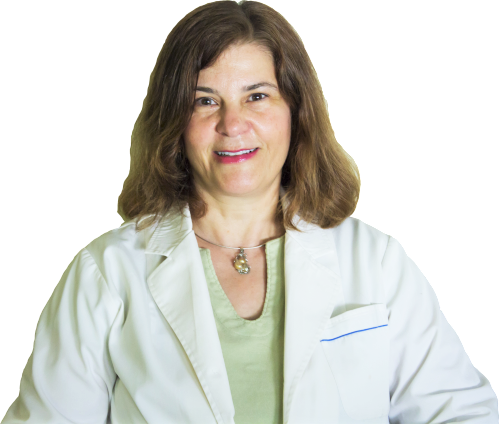
In his lifelong search for sight, Horton tapped into acupuncture, a treatment from Traditional Chinese Medicine. In January, he found Dr. Angelica Kokkalis, a Western medical doctor and Oriental doctor in private practice in Zionsville. This West Lafayette resident also has a staff position at St. Vincent Hospital’s Center for Complementary Medicine and Pain Management, where she specializes in pain control.
In her private practice, she offers Traditional Chinese Medicine diagnostic tools such as tongue and pulse analysis, individualized herb medicine formulas based on diagnosis and a variety of treatment options including acupuncture and moxibustion.
“Acupuncture is a very safe system of health care when done by a well-trained practitioner,” Kokkalis said.
Seven years ago, Americans made 9 million to 12 million acupuncture patient visits, according to a Food and Drug Administration report.
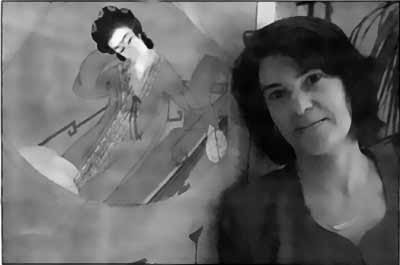
Dr. Angelica Kokkalis
According to the Centers for Disease Control, traditional medicines including herbal preparations account for 30 percent to 50 percent of the total medical consumption. In the 1990s, one third of the American adult population have used alternative treatment. That percentage is even smaller in the Greater Lafayette area, which means establishing a private practice in the area has been difficult for Kokkalis.
The wellness of the human body depends on keeping all its elements in balance, according to Traditional Chinese Medicine. The basic belief is that humans have a natural flow of energy, known as Qi, which circulates through the body on meridians. Pain and disease are the result of a disruption, deficiency or blockage of this energy. When acupuncture is selected as therapy, tiny needles are placed in proper acupoints along the meridians to help regulate the body’s energy flow.
“My sessions are 45 minutes, and I’ll take a nap every time. Two sessions ago, she came in the room and removed half of the needles before I woke up. So, I’m pretty well relaxed,” said Horton, whose insurance covers acupuncture. Most insurance plans, including Medicare and Medicaid, don’t.
More than 20 acupuncture needles are placed in Horton’s body, including five needles that are inserted in the meridians around each eye.
“I’m impressed with his improvement, because I’m not the only one who thought nothing could be done,” said Dr. Marcia Monroe, Horton’s Lafayette optometrist.
“Medical establishments need to recognize that Western medicine is not a panacea, and they need to combine the best of both worlds.” said Dr. Angelica Kokkalis, who offers Traditional Chinese Medicine. Kokkalis expects that Traditional Chinese Medicine won’t be a mainstream treatment option for some time.
“It will take another generation of physicians — 30 to 40 years. Medical establishments need to recognize that Western medicine is not a panacea, and they need to combine the best of both worlds,” Kokkalis said.
That’s what Kokkalis does. Her dual career has allowed her to combine her talents as a medical and Oriental doctor.
Kokkalis lived in Greece until she received a Sino-Greek Government Student Exchange Scholarship to study medicine in China. She combined her education in conventional medicine with training in Traditional Chinese Medicine from Beijing Medical University. In 1991, she came to the United States after accepting a postdoctoral research fellowship at the University of California at San Diego Medical Center. Following the fellowship, she relocated to Minnesota, where she developed a private practice in Traditional Chinese Medicine and research in immune system reaction to organ transplantation at the Veterans Administration Medical Clinic in Minneapolis.
In addition to acupuncture, moxibustion and herbal formulas have maintained their popularity in many Asian countries, including China, Japan, India and Pakistan. If people are looking for testimony about how well Traditional Chinese Medicine can be practiced, Kokkalis says to observe how China’s population manages under one health care system.
According to Traditional Chinese Medicine, everything has two sides known as Yin and Yang. Yang is attributed to conditions that appear active, external, upward and exciting. Yin portrays the opposite, such as asthenic, internal, cold and inhibitive. Kokkalis said Yin and Yang theory is widely used in Traditional Chinese Medicine for explaining the physiological and pathological phenomena of the human body and for directing the diagnosis and treatment of a disease.
When a patient steps into Kokkalis’ office, she starts the examination with an interview, an in-depth profile. If a patient is in her office for back pain, she wants to talk about their entire lifestyle. ‘You have to treat the whole picture. It’s more than just acupuncture and nerves. It’s adjusting the diet,” Kokkalis said. “I don’t see them as back pain patients, I see them as whole.”
Since Horton started treatment with Kokkalis, he has also incorporated a complete vitamin in his diet. Every patient Kokkalis has seen in her private practice adjusts their lifestyle in some capacity. To evaluate an individual’s all-encompassing health, Kokkalis uses the tongue and pulse diagnosis. “I wish Western medicine was trained to do the tongue diagnostic because they’d save money from doing many diagnostics,” Kokkalis said. The color, appearance and mobility of the tongue are part of Kokkalis’ diagnostic routine. By looking at a tongue, Kokkalis can reveal the history of a person — did they smoke, did they have a stroke, etc. A normal tongue is light red in color, free in motion, lustrous and moist.
“It is declared by the modern research work that appearance of tongue looks like a window for seeing into internal organs of the body,” Kokkalis said.
She also relies on the pulse diagnostic as part of her patient evaluation. The quality and speed of the pulse can indicate an imbalance in the body. For example, a thin pulse is a sign that the blood is deficient and unable to fill the pulse properly.
Even though alternative treatments’ popularity is increasing, not all physicians are part of the movement. Kokkalis said the tendency to denounce Traditional Chinese Medicine is keeping her from practicing in Greater Lafayette.
“Physicians don’t have knowledge and say, ‘You can’t have it,’ because they don’t know about it,” Kokkalis said. “They should open up and do more reading. Can modern and Chinese medicine be combined? Yes. Not only can they be combined, but I believe they can enhance each other’s effects.”
Acupuncture Analgesia
Over forty years of research have been devoted to Acupuncture Analgesia. On November 3rd 1997, the National Institute of Health sponsored a NIH Consensus Development Conference to evaluate the scientific and medical data on the uses, risks, and benefits of acupuncture procedure for a variety of conditions. Most of the research was on diverse pain conditions. Since 1965 the research team of Professor Jisheng Han, of Beijing Medical University Health and Science, has devoted themselves to the clarification of the neurochemical mechanisms of pain relief by acupuncture. Over 300 scientific papers have been published in the past 4 decades.
The ancient healing art of acupuncture seems to be revitalized in the era of modern medical sciences due to the identification of its high costeffectiveness and the partial unraveling of its scientific mechanisms of action. Hubei Science and Technology Press has published in 1998, in English, the summary of the research achievements on the Neurochemical Basis of Pain relief by Acupuncture obtained in the years 1987-1997 by Professor Jisheng Han. The use of modern scientific methodology is absolutely essential for the clarification of the scientific basis of acupuncture therapy. Research on the physiology of acupuncture has been contributing to the development of neuroscience from the molecular level to the behavioral. High-quality scientific research will certainly pave the way for the acceptance and more popular use of acupuncture and related techniques for the benefit of patients suffering from chronic pain and many other functional disorders.
According to a study published in the November issue of Archives of Dermatology, 2008 an effective treatment for plaque-type psoriasis can be found in traditional Chinese medicine. Yin-Ku Lin, M.D. (Chang Gung Memorial Hospital and Chang Gung University, Taoyuan, Taiwan) and colleagues found that an ointment based on the dark-blue, plant-based powder indigo naturalis can be used treat the skin condition.
The Aspects can be observed:
1. The regulation of body in Qigong(Posture).
Correct postures are the preconditions that guarantee smooth respiration and induce mental relaxation and tranquility. The lower level of Qigong effect comforts our body. The higher level of Qigong effect will put the out-of-order atoms and neural cells back in order.
2. The regulation of breathing in qigong(Respiration).
The regulation of breathing can achieve the effects of regulating the qi and blood and massaging the internal organs, resulting in tranquility and physical relaxation.
3. The regulation of mind in Qigong (Mind-will).
The key link in the regulation of mind is to concentrate the mind, get rid of all stray thoughts, replace myriads of thoughts with one thought through exertion of mind-will, thus gradually leading into tranquility and enter a state of void.
First we have to master the theory of Qigong. Method dwells in the theory, they can’t be separated. Once you understand the theory, the method follows.
Second, Qigong is not a common thing. We can’t look at it in an ordinary way. Some of the phenomenon that appear during the practice are hard to explain by common sense. So we can’t simply “learn” Qigong, what’s more important is the “meditation”, the “sudden understanding”.