


Alpha-gal syndrome is a tick-associated allergy that can cause reactions to mammalian meat and other mammal-derived products. For many people, this condition begins after a tick bite and leads to symptoms after eating foods such as beef, pork, lamb, venison, dairy, or other mammalian products.
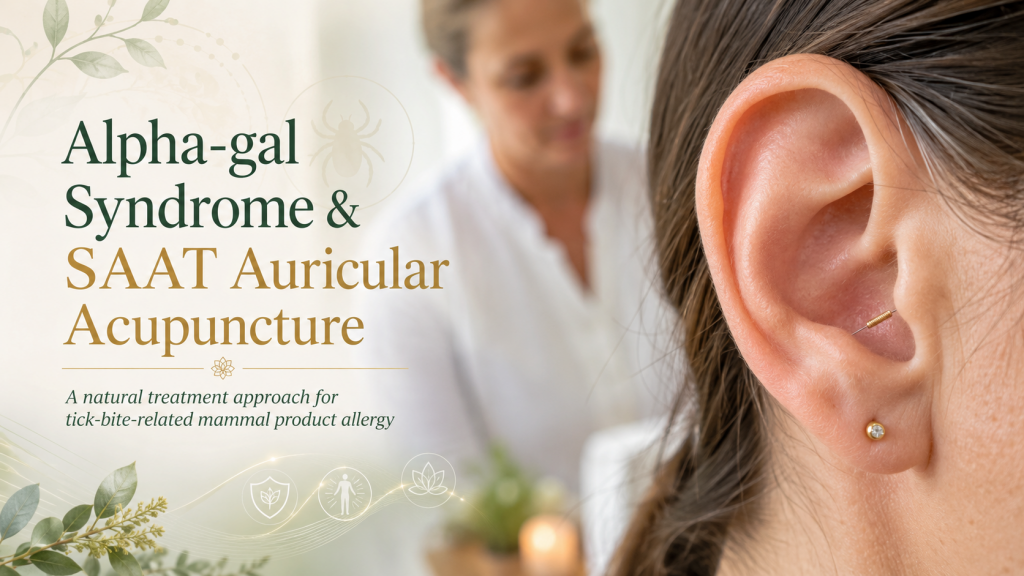
Dr. Angelica Kokkalis offers treatment support for Alpha-gal syndrome using a specialized auricular acupuncture technique called SAAT, or Soliman Auricular Allergy Treatment. This method is designed to address allergic responses through precise stimulation of points on the ear.
When SAAT auricular acupuncture is combined with the correct allergy elimination protocol and a full balancing treatment, the results can be very encouraging. At Han Institute, this whole-person approach is used to help the body move toward recovery by addressing both the specific allergy pattern and the broader energetic imbalance behind the condition.
What Is Alpha-gal Syndrome?
Alpha-gal syndrome, also called Alpha-gal allergy, mammalian meat allergy, or tick bite meat allergy, is an allergic condition associated with sensitivity to a carbohydrate molecule called galactose-alpha-1,3-galactose, commonly shortened to alpha-gal.
Unlike many food allergies, Alpha-gal reactions can be delayed. Symptoms may appear several hours after exposure, which can make the condition confusing and difficult for patients to identify. Some people experience digestive symptoms, skin reactions, respiratory symptoms, or more serious allergic responses.
Common Alpha-gal syndrome symptoms may include:
- Stomach pain, nausea, diarrhea, or digestive upset
- Hives, itching, or skin eruptions
- Swelling or inflammation
- Respiratory discomfort
- Delayed allergic reactions after eating mammalian meat or dairy
- Sensitivity to mammal-derived products
Many patients are told that avoidance is the only option. While avoidance may be necessary, especially for patients with a history of severe reactions, auricular acupuncture and SAAT offer another supportive treatment pathway.
What Is SAAT?
SAAT stands for Soliman Auricular Allergy Treatment. It is a specialized form of auricular acupuncture developed by Dr. Nader Soliman.
Auricular acupuncture is based on the understanding that the ear reflects the whole body. Specific points and zones on the ear correspond to different organs, systems, and regulatory pathways. In SAAT, a precise allergy-related zone on the ear is identified and treated using a small acupuncture needle.
For Alpha-gal syndrome, SAAT focuses on the body’s allergic response to the alpha-gal trigger. The technique is designed to help calm and retrain the body’s immune response so that the allergen is no longer perceived in the same reactive way.
Published Research on SAAT and Alpha-gal Syndrome
A published case series in Medical Acupuncture reviewed patients with Alpha-gal mammal product allergy who received SAAT treatment. The article, titled “Successful Treatment for Alpha Gal Mammal Product Allergy Using Auricular Acupuncture: A Case Series,” reported that a large majority of patients with follow-up data experienced remission of their symptoms after SAAT treatment.
The article is available through PubMed using PMID: 35003502
While more research is needed, this published case series is an important step in documenting the use of SAAT auricular acupuncture for Alpha-gal syndrome.
Han Institute’s Approach to Alpha-gal Syndrome
At Han Institute, Alpha-gal syndrome treatment is not approached as a single isolated symptom. Dr. Angelica Kokkalis uses a more complete treatment strategy that may include:
- SAAT auricular acupuncture
- Allergy elimination protocol
- Balancing treatment
- Traditional Chinese Medicine evaluation
- Support for digestion, inflammation, stress, and immune balance
The SAAT method addresses the specific Alpha-gal allergy pattern, while the balancing treatment helps support the whole body. This is important because many patients with Alpha-gal syndrome are not only dealing with food reactions. They may also be dealing with inflammation, stress, digestive disruption, fatigue, fear around eating, and nervous system imbalance.
A balancing treatment can advance the auricular acupuncture method by helping the body stabilize and move more fully toward recovery.
Why Balancing Treatment Matters
The body works as a whole system. When there is an allergic response, the immune system, digestive system, nervous system, and energetic pathways may all be involved.
A balancing acupuncture treatment helps support the body’s internal regulation. This may include supporting the liver, kidney, spleen, stomach, lungs, nervous system, and overall flow of energy. In Traditional Chinese Medicine, the goal is not only to reduce symptoms but also to restore harmony in the body.
For Alpha-gal syndrome patients, this whole-body balancing approach may help:
- Support immune regulation
- Calm the nervous system
- Improve digestive function
- Reduce inflammation patterns
- Strengthen constitutional balance
- Support long-term recovery
This is why Dr. Angelica Kokkalis combines SAAT auricular acupuncture with allergy elimination and balancing treatment rather than relying on one technique alone.
Can Acupuncture Help Alpha-gal Syndrome?
Auricular acupuncture and SAAT may be a promising treatment option for people struggling with Alpha-gal syndrome, tick bite allergy, mammalian meat allergy, or delayed allergic reactions to red meat and dairy.
We have successfully treated this condition using SAAT auricular acupuncture in combination with the proper allergy elimination protocol and balancing treatment. Each patient is evaluated individually, and treatment is tailored to their history, symptoms, and level of sensitivity.
Patients with a history of severe allergic reactions or anaphylaxis should continue to work with their medical doctor or allergist and should follow all medical safety recommendations.
Schedule an Alpha-gal Syndrome Consultation
If you have Alpha-gal syndrome after a tick bite, or if you have developed reactions to red meat, dairy, or mammalian products, Han Institute may be able to help.
Dr. Angelica Kokkalis offers SAAT auricular acupuncture treatment, allergy elimination support, and balancing acupuncture care for patients seeking a natural treatment approach for Alpha-gal syndrome.
Contact us to schedule a consultation and learn whether SAAT auricular acupuncture may be appropriate for your condition.
Medical Disclaimer: This article is for educational purposes only and is not a substitute for medical diagnosis, treatment, or advice. Alpha-gal syndrome can involve serious allergic reactions. Patients should consult their physician, allergist, or qualified healthcare provider before changing their diet, reintroducing mammalian products, or beginning any new treatment.
A Traditional Chinese Medicine Perspective
Elk velvet antler has been used in Traditional Chinese Medicine (TCM) for over 2,000 years to strengthen the body, restore vitality, and support Jing—the foundational essence that governs growth, reproduction, and longevity. In the modern world, many men ask a specific question:
Can elk velvet antler help support healthy testosterone levels?
The short answer: Elk velvet antler doesn’t function like synthetic testosterone boosters—but it can support the deeper systems that influence hormonal balance.
Here’s what that means in the context of TCM and current research.

How TCM Understands Hormonal Strength
In TCM, testosterone isn’t viewed as a standalone hormone. Instead, it’s considered part of a broader pattern of Kidney Yang and Kidney Jing.
- Kidney Yang corresponds to drive, heat, energy, sexual vigor, and physical strength.
- Kidney Jing is the deeper essence responsible for fertility, endurance, and long-term vitality.
When these decline, symptoms often mirror the modern understanding of low testosterone:
- fatigue
- reduced libido
- slower recovery
- lower physical stamina
- brain fog
- decreased motivation
Elk velvet antler is one of the most important herbs/tonics in TCM for restoring both Kidney Yang and Jing.
What Modern Research Suggests
While TCM doesn’t measure testosterone directly, recent studies help bridge the gap between ancient theory and modern biology.
Research on elk velvet antler shows that it may:
- support healthy androgen levels
- improve exercise recovery and strength
- increase IGF-1 (a growth factor connected to vitality and performance)
- reduce fatigue under physical stress
- support blood flow and stamina
These effects align closely with how TCM practitioners have used it for centuries—to strengthen the body at a systemic level rather than forcing hormonal spikes.
Important distinction:
Elk velvet antler is not a synthetic testosterone booster. It supports foundational systems that help regulate hormones naturally, which makes it valuable for people who want long-term balance rather than quick fixes that come with side effects.
How Elk Velvet Antler Supports Testosterone Naturally
From a combined TCM and physiological perspective, elk velvet antler may help by:
1. Nourishing Kidney Yang
This supports energy, libido, and the “fire” behind physical and mental drive.
2. Replenishing Jing
This corresponds to deeper reproductive vitality, sperm health, and restoration after stress or illness.
3. Improving Circulation
Better microcirculation means better delivery of oxygen and nutrients to reproductive organs.
4. Enhancing Recovery
Strong recovery pathways reduce physical burnout, which helps the endocrine system stabilize naturally.
TCM views hormonal balance as the outcome of overall system harmony, not isolated supplementation. Elk velvet antler is one tool for achieving that harmony.
Who May Benefit Most
Elk velvet antler may be especially supportive for:
- men experiencing fatigue or low vitality
- individuals recovering from high stress or overwork
- athletes or active adults
- men in midlife experiencing natural hormonal shifts
- those looking for a gentle, long-term vitality tonic
As always, individual patterns matter. A TCM practitioner evaluates the root—not just the symptom.
Choosing a High-Quality Source Matters
Not all elk velvet antler is created equal. Purity, sourcing, and processing make a significant difference.
For reliable, premium-quality elk velvet antler that aligns with traditional preparation standards, Dr. Kokkalis recommends reviewing the offerings at American Elk Velvet. Their products are produced with care, transparency, and respect for both traditional use and modern quality standards.
For thousands of years, Traditional Chinese Medicine (TCM) has relied on the healing power of nature—particularly herbs—to restore balance, strengthen vitality, and prevent disease. In TCM, health is not simply the absence of illness. It’s the harmonious flow of Qi (energy) through the body’s meridians and organ systems. When that flow is disrupted, herbs can help restore equilibrium.
Why Herbs Are Central to TCM
Unlike Western medicine, which often isolates single active compounds, TCM views herbs as part of a living system. Each plant carries its own energy, flavor, and nature—cooling, warming, drying, or moistening—and these qualities are matched to the individual’s unique pattern of imbalance. Herbal formulas are rarely one-size-fits-all; they are customized to address both the symptoms and the root cause.
Some of the Most Valued Chinese Herbs
Ginseng (Ren Shen)
Often called the “King of Herbs,” ginseng is used to strengthen Qi and support the body’s overall resilience. It enhances stamina, focus, and immunity—helping the body adapt to both physical and emotional stress.
Goji Berries (Gou Qi Zi)
Known for nourishing the liver and kidneys, goji berries are said to improve eyesight, support longevity, and enhance overall vitality. In modern times, they’ve gained fame as a superfood for their antioxidant properties.
Astragalus (Huang Qi)
A powerful immune tonic, astragalus strengthens the body’s defenses and promotes wound healing. It’s often used preventively, especially during cold and flu season.
Reishi Mushroom (Ling Zhi)
Revered as the “Herb of Immortality,” reishi is used to calm the spirit, reduce stress, and support the immune system. It’s particularly beneficial for those dealing with fatigue, anxiety, or sleep issues.
Schisandra (Wu Wei Zi)
Translated as the “Five Flavor Fruit,” schisandra helps the body adapt to stress, boosts liver function, and sharpens concentration. It’s considered a longevity herb in many classical formulas.
Herbs for the Mind and Spirit
Many people ask, “Which herb is a miracle for the brain?” While no single herb works miracles, several have long been used to support mental clarity and emotional balance.
- Polygala (Yuan Zhi) is used to calm the heart and strengthen the connection between the heart and mind, aiding memory and emotional stability.
- Ginkgo (Yin Xing Ye) promotes blood flow to the brain and supports cognitive function, especially in older adults.
The Philosophy Behind Herbal Formulas
In TCM, herbs are rarely taken alone. Instead, they are blended into formulas that work synergistically. Each ingredient plays a role—some target the main imbalance, others support the body, guide the formula to specific organs, or harmonize the overall effect. This balance of relationships mirrors the way TCM views the body: as an interconnected ecosystem, not isolated parts.
Why Traditional Chinese Medicine Is Gaining Renewed Respect
While some Western institutions have been slow to accept TCM due to its holistic approach and qualitative language, modern research continues to validate many of its principles. Scientific studies have demonstrated the immune-modulating effects of ginseng, the anti-inflammatory properties of astragalus, and the neuroprotective qualities of reishi and schisandra. As integrative medicine evolves, more practitioners are combining ancient wisdom with modern science.
A Word from Dr. Angelica Kokkalis
At The Han Institute, we believe the best medicine honors both tradition and innovation. Our approach blends classical Chinese herbal knowledge with modern research and clinical practice. Whether you’re seeking to boost energy, calm your mind, or support recovery, herbal therapy can play a vital role in your healing journey.
Acupuncture, one of the oldest healing practices in Traditional Chinese Medicine (TCM), has been used for thousands of years to restore balance, ease pain, and promote overall wellness. At The Han Institute in West Lafayette, Dr. Angelica Kokkalis combines her extensive training in both Eastern and Western medicine to help patients experience the benefits of this time-honored therapy.
What does acupuncture do?
In TCM, acupuncture works by stimulating specific points on the body, known as acupoints, to influence the flow of Qi (pronounced chee), or vital energy. When Qi becomes blocked or imbalanced, it can lead to pain, illness, or emotional distress. By gently inserting fine, sterile needles into these points, acupuncture helps to:
- Restore balance in the body’s energy systems
- Relieve pain by stimulating the nervous system and releasing endorphins
- Support emotional health by calming the mind and reducing stress
- Improve circulation and reduce inflammation
- Enhance the body’s natural healing response
Modern research also shows that acupuncture affects neurotransmitters, hormones, and the immune system, making it a powerful complement to conventional care.
What are the pros of acupuncture?
- Natural and drug-free – Offers an alternative to medications for pain and stress.
- Personalized treatment – Each session is tailored to your body’s needs.
- Broad application – Can help with pain management, digestive issues, sleep disturbances, anxiety, women’s health, and more.
- Minimal side effects – When performed by a licensed acupuncturist like Dr. Kokkalis, acupuncture is safe and gentle.
- Supports whole-body wellness – Goes beyond symptom relief to address root imbalances.
What are the cons of acupuncture?
- Temporary soreness or bruising – Some patients may feel mild tenderness at needle sites.
- Multiple sessions may be needed – Acupuncture is often most effective as part of a series of treatments.
- Not a quick fix – Healing takes time and consistency.
- Varies by individual – While many experience great benefits, results can differ from person to person.
A balanced approach
At The Han Institute, Dr. Kokkalis integrates acupuncture with other holistic therapies—including herbal medicine, nutrition guidance, and innovative treatments for neurological and chronic conditions. Her goal is to create a safe, calming environment where healing can unfold naturally.
Are you in the West Lafayette, Indiana area and curious if acupuncture could help you?
Contact Dr. Angelica Kokkalis to schedule a consultation: Schedule a Visit or call (765) 497-0817.
In Traditional Chinese Medicine (TCM), acupuncture has been practiced for thousands of years to restore balance, promote healing, and enhance well-being. While acupuncture is generally safe and highly beneficial, certain acupuncture points are considered “forbidden” during pregnancy due to their powerful effects on the body.
These 5 forbidden points are:
- LI4 (Hegu) – located on the hand, between the thumb and index finger.
- SP6 (Sanyinjiao) – found on the inner leg, above the ankle.
- BL60 (Kunlun) – located near the ankle, behind the lateral malleolus.
- GB21 (Jianjing) – found on the shoulder, midway between the neck and the edge of the shoulder.
- BL67 (Zhiyin) – located at the tip of the small toe.
Why Are These Points “Forbidden”?
These points are not “forbidden” in the sense that they are harmful in general. In fact, outside of pregnancy, they are commonly used for a variety of therapeutic purposes such as relieving pain, reducing stress, or regulating energy flow. However, during pregnancy, these points are contraindicated because:
- They can stimulate uterine contractions, which may lead to miscarriage or premature labor.
- They strongly move qi and blood, creating effects that may destabilize the delicate balance required for a healthy pregnancy.
- Their stimulation can be too intense for the body during this sensitive time.
Safe and Supportive Acupuncture in Pregnancy
While these five points are avoided, many other acupuncture points are safe and even highly beneficial during pregnancy. Acupuncture therapy can help:
- Ease morning sickness and nausea
- Relieve lower back and hip pain
- Support healthy digestion and sleep
- Reduce stress and anxiety
- Prepare the body for labor in the final weeks (using safe techniques and points)
At The Han Institute, Dr. Angelica Kokkalis carefully considers each patient’s health history, stage of pregnancy, and overall constitution when creating a treatment plan. Safety and holistic support are always at the forefront.